

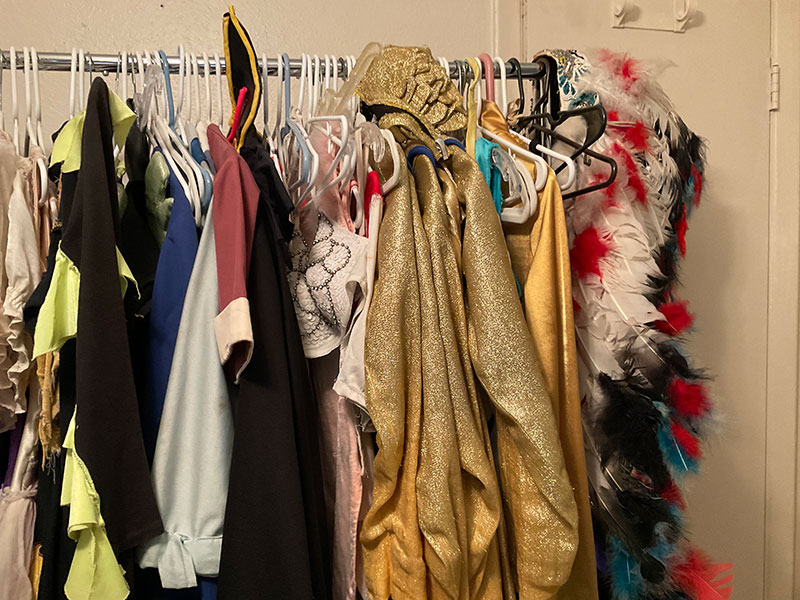
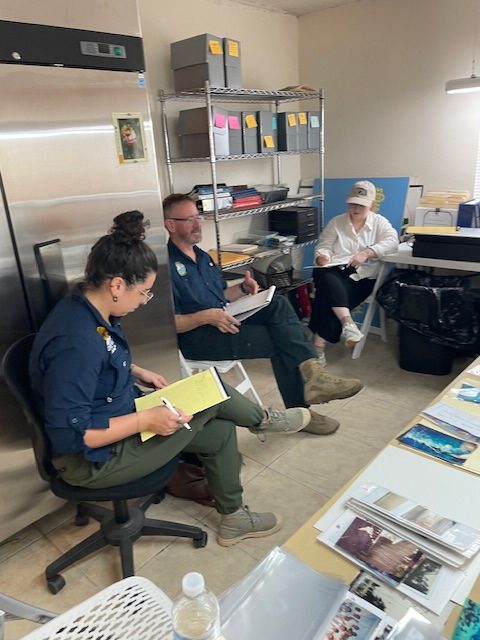
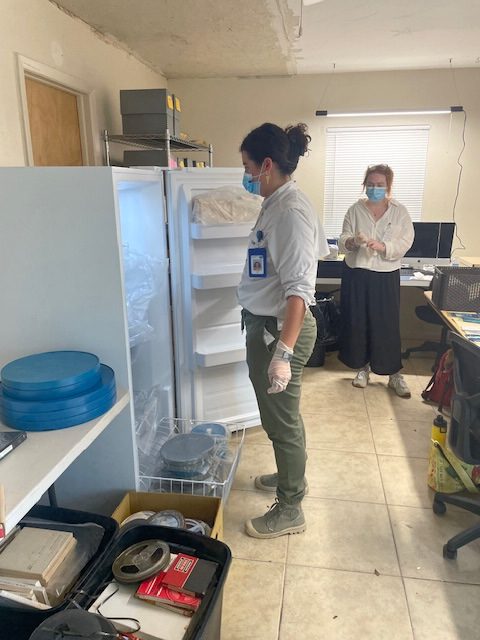
 The Weeki Wachee Archive is considered a hidden collection because it is a special collection of historical artifacts that is largely unprocessed, uncataloged, and therefore inaccessible to both the public and researchers. A goal of this project is to reveal the collection and make it accessible. The archival workshop consists of approximately 600 square feet of rooms filled with materials documenting the park’s history. Before the Weeki Wachee Archival Project began, the collection included three storage cabinets containing photographs, blueprints, and documents; two shelving units filled with artifacts; a broken-down refrigerator holding film reels from the 1950s and 1960s; and a clothing rack containing costumes. Only one of the three storage cabinets housed materials in proper archival storage conditions.
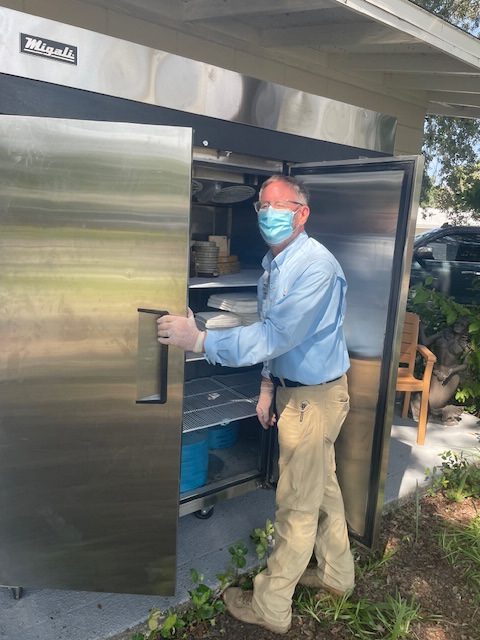
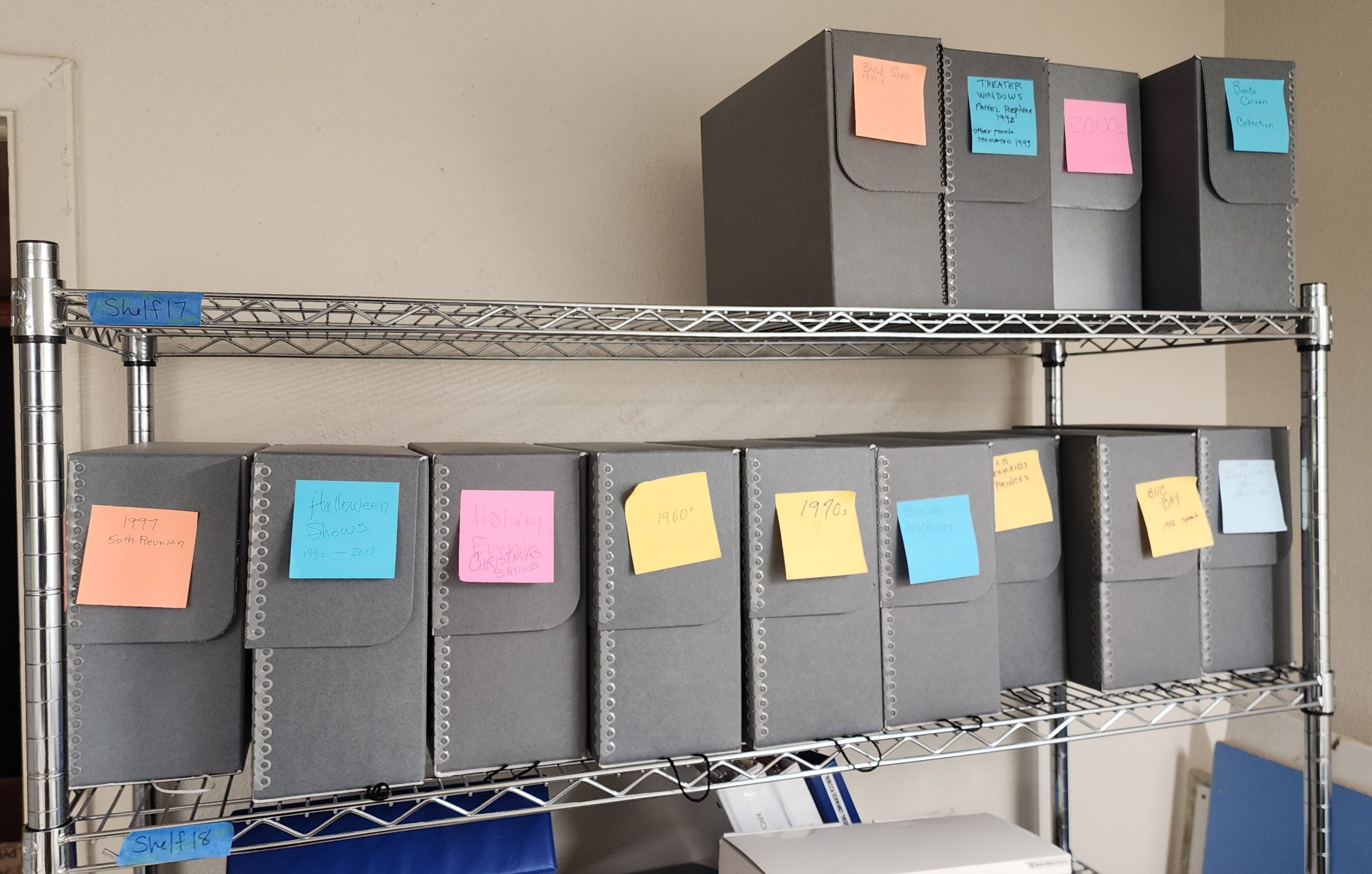 One of the first priorities of the project is to bring the archive collection closer to professional archival standards. According to the Society of American Archivists, historical collections should be maintained between 60–70 degrees Fahrenheit with humidity levels between 30–50 percent. LED lighting is also recommended because it emits minimal heat and no infrared radiation, reducing damage to sensitive materials. The Library of Congress further recommends freezing film reels if deterioration has already begun. To improve preservation conditions, the Friends of Weeki Wachee Springs State Park purchased dehumidifiers, air conditioning units for each room, deep freezers for film reels, LED lighting panels for workstations, and window coverings to reduce UV light exposure.
Proper storage was another essential step in the preservation process. As physical media ages, it naturally deteriorates. Paper releases acid as it breaks down, causing yellowing and brittleness, while humidity and UV light can fade and damage photographs. To slow this deterioration, each document and photograph must be stored in acid-free Mylar sleeves, and groups of items must be housed in acid- free archival boxes. Project staff identified and purchased the most common sizes and types of archival supplies needed for the collection. Additional shelving units were also added to accommodate materials being rehoused in proper storage.
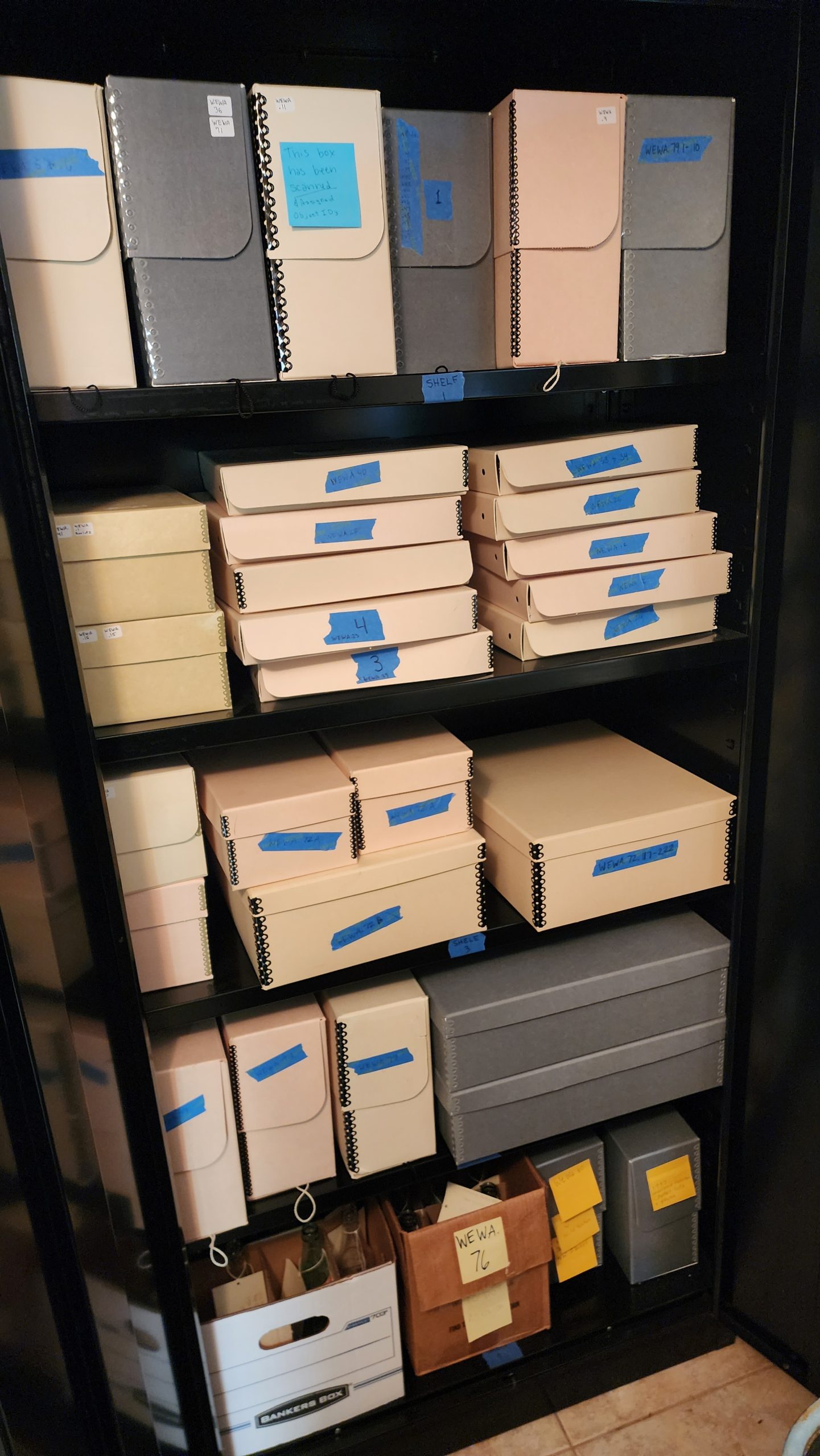 Before cataloging could begin, the archive first needed to be organized in a way that would make materials easier to locate and manage. Because the collection contains tens of thousands of items, organization is an ongoing process. The most practical system for the archive was grouping similar materials together and arranging them by decade of creation. As items are sorted, they are placed into protective Mylar sleeves to ensure their safety preservation while they await cataloging.
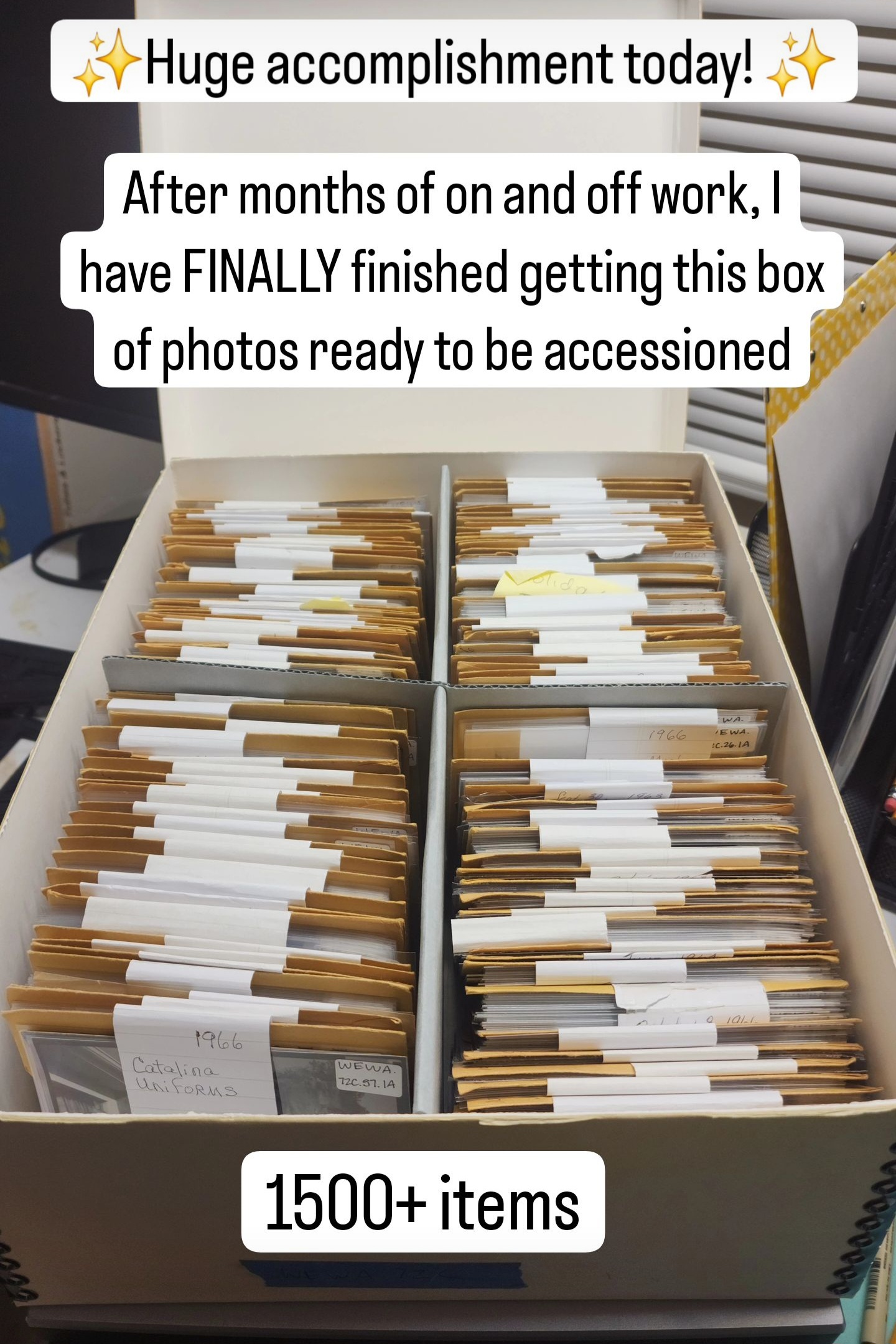
Cataloging Efforts began with the oldest materials in the collection, as these items are the most vulnerable to further deterioration. One major project involved photos and negatives from the 1950s and 1960s taken by Weeki Wachee’s official photographers. These images documented promotional photo shoots used in park advertising materials. Each photo set had originally been stored in its own envelope, often labeled with the date, title of the shoot, and photographer’s name. The sets typically included both negatives and photographic prints.
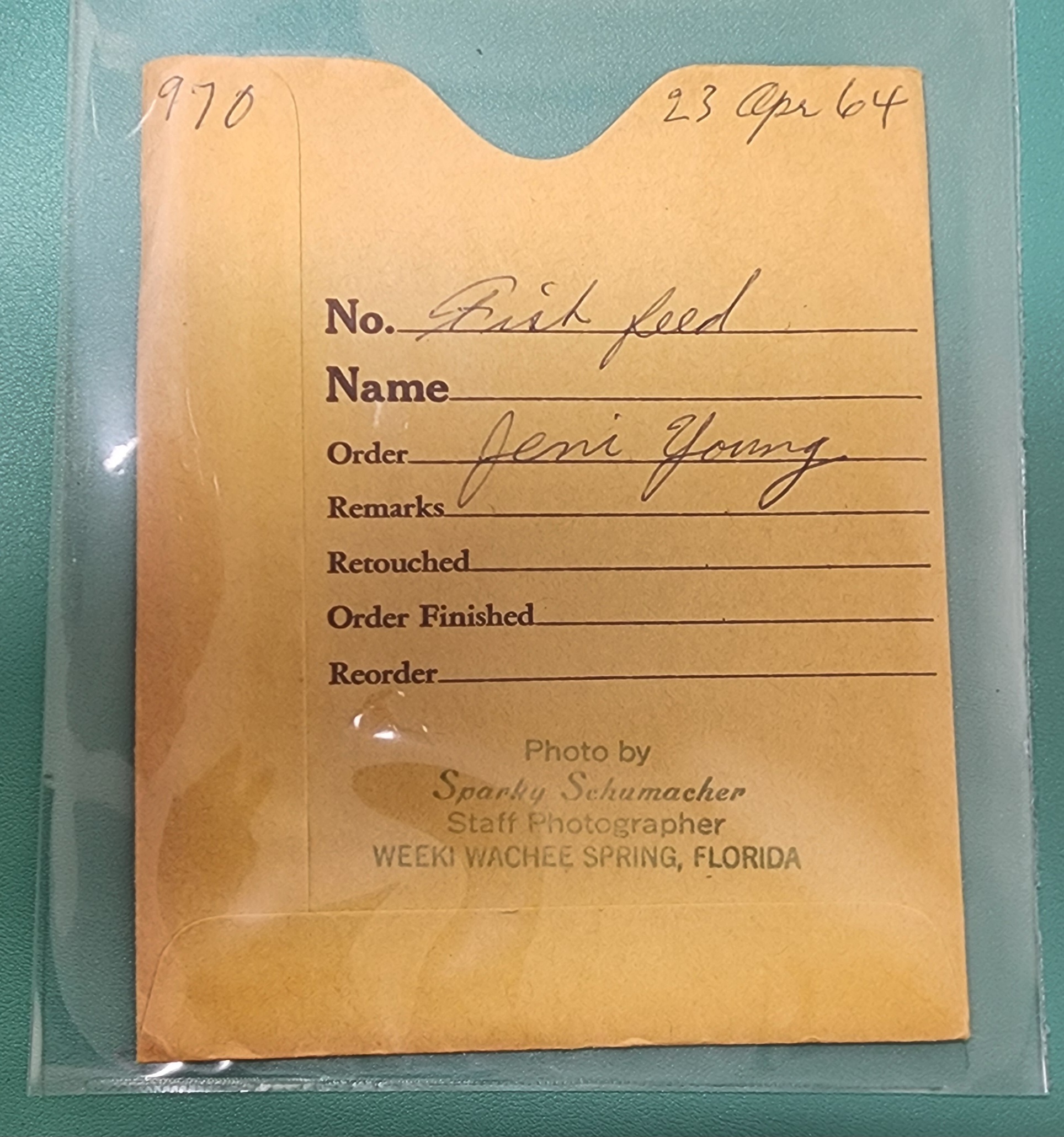
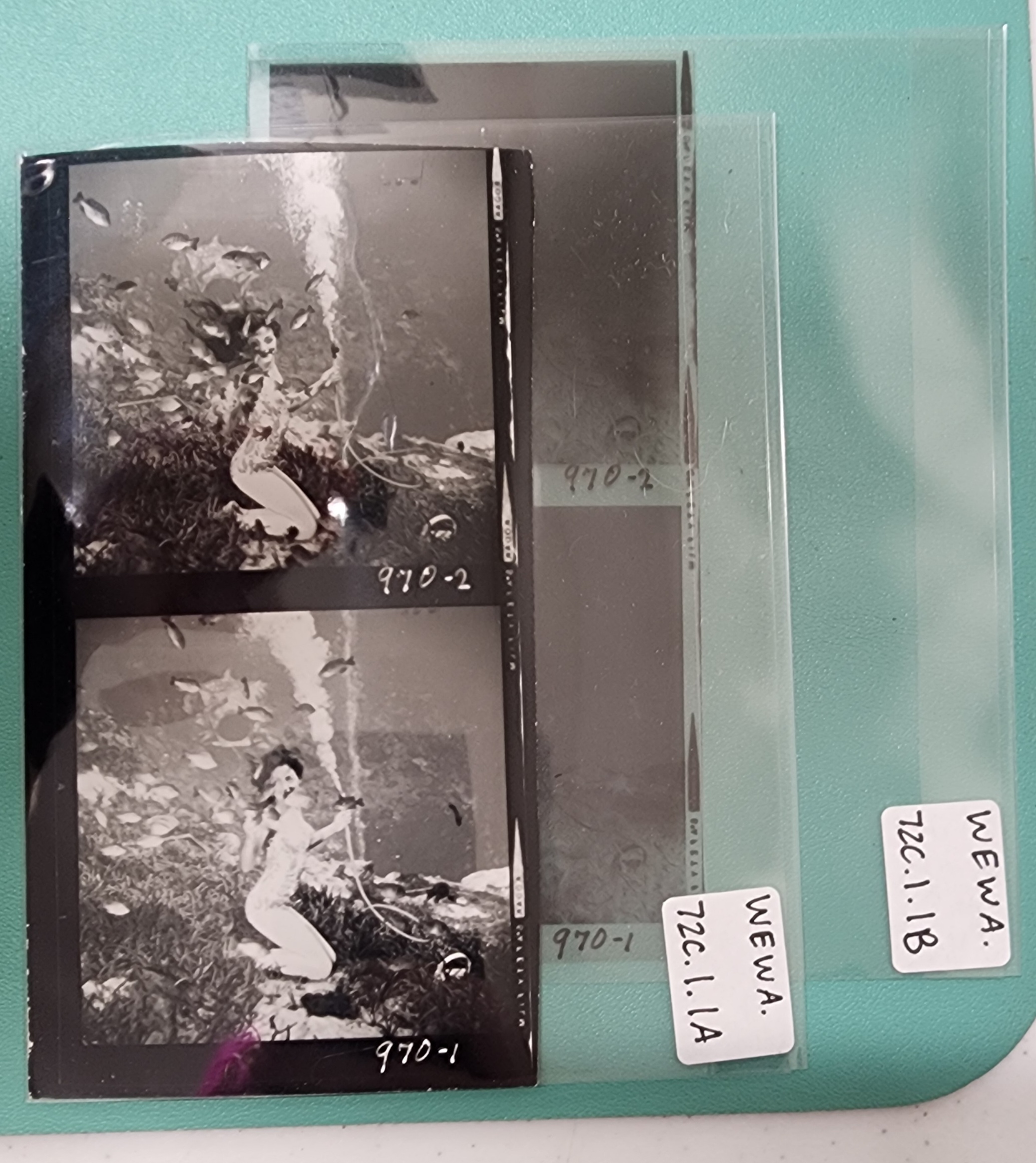 The first step in processing these collections was organizing the photographs within each set. The original photographers had written numbers beneath each negative for their own organizational purposes, so the negatives and prints were sorted according to those numbers. This ensured that every image in a set would be scanned, since some sets did not contain prints of every photograph. Once individual sets were organized, all
photo sets were arranged chronologically to create a clearer historical timeline of the park’s history development and for more comprehensive displays in a future Visitor’s Center.
Each item was then assigned a catalog number according to the standards established by the Florida Department of Environmental Protection (DEP) archivists. Because Florida has 175 state parks, maintaining a uniform numbering and cataloging system is essential for preventing information from being lost or misplaced in digital records. After training with DEP archivists, these standards were implemented within the Weeki Wachee Archive, giving every artifact its own unique identifier.
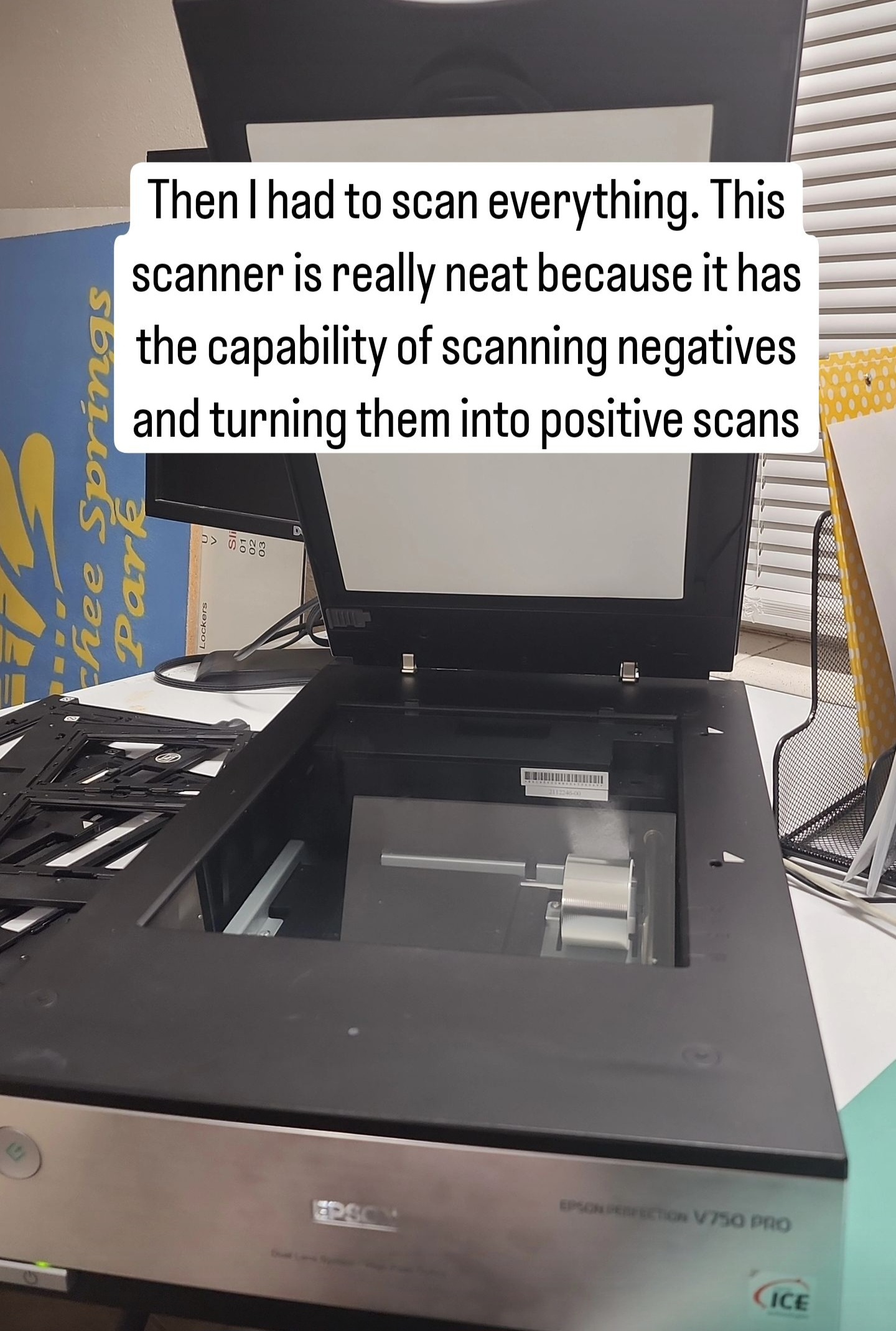
After numbering, high-quality digital scans were created for every item in the collection. The archive’s scanner allows it to convert negatives into photographic images. Once digitized, detailed metadata was created for each item to preserve its historical context. For photographs, this process included identifying the mermaids featured in the images, the shows being performed, costumes being worn, locations depicted, events being documented, and additional relevant information. This state of the process required extensive research and collaboration with former mermaids, whose firsthand knowledge of the park has been invaluable. Many former performers have volunteered countless hours helping identify people, places, and events represented in the archive.
Once cataloging was completed, all digital scans and metadata were sent to Florida DEP archivists to upload into the state’s museum cataloging software. The physical materials were then safely stored in archival cabinets. This same process is repeated for every item in the collection. Preserving Weeki’s history is an on-going project. Although it is time-intensive, the work ensures that the history of Weeki Wachee will be preserved and accessible for future generations, and to meet our goal of establishing a Visitor’s Center within Weeki Wachee Springs State Park.



Indigenous History
Long before it became a world-famous attraction, Weeki Wachee Springs was known to the Indigenous peoples of Florida. The name “Weeki Wachee” comes from a Seminole/Creek phrase often translated as “little spring” or “winding river.” The crystal-clear spring has been part of Florida’s natural and cultural history for generations.

A Vision Beneath the Surface
Former Navy frogman trainer Newt Perry discovers Weeki Wachee Springs. At the time, the spring was filled with discarded items including appliances, vehicles, and other debris. Perry cleaned up the spring and created an innovative underwater breathing system using air hoses, allowing performers to appear to breathe underwater.

The First Mermaid Show
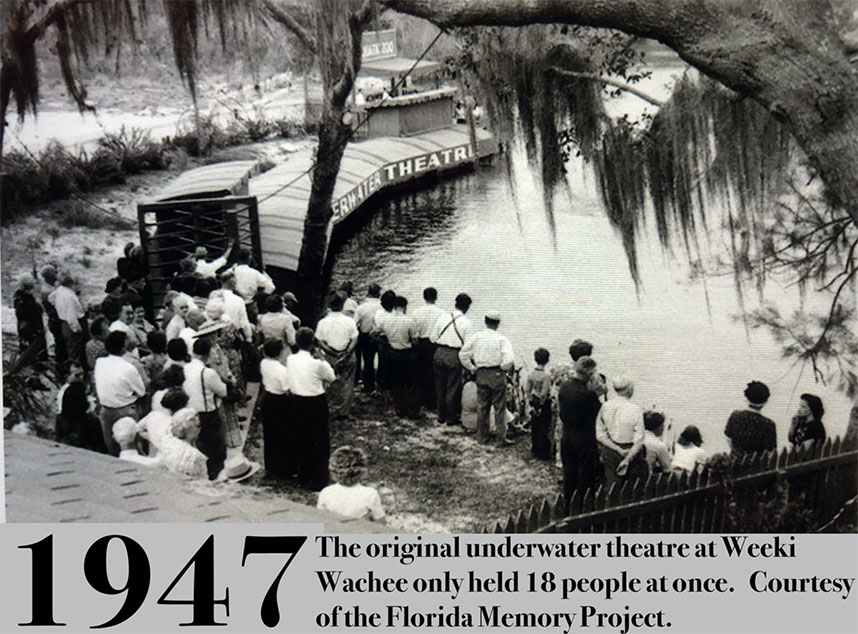
The first underwater mermaid performance debuted in the original 18-seat submerged theatre carved into the limestone spring. A Florida legend was born. The original tile under the underwater windows in the theatre is still a part of the original charm.

Hollywood Discovers the Mermaids
Weeki Wachee captured national attention as Hollywood came calling. Film appearances and publicity helped make the mermaids famous around the world. Movie productions connected with this era included The Incredible Mr. Limpet and Neptune’s Daughter. The attraction continued to grow, adding a jungle cruise, orchid gardens, and animal shows, becoming one of Florida’s most iconic roadside destinations.

ABC-TV Era Begins
The American Broadcasting Company (ABC-TV) purchased Weeki Wachee Springs and transformed it into a major tourist attraction. ABC built the current 400-seat underwater theatre and expanded the productions with beloved fairy tales including Alice’s Adventures in Wonderland, Peter Pan, and Snow White and the Seven Dwarfs.

The Golden Age of the Mermaids
At its peak, Weeki Wachee welcomed up to half a million visitors each year, with mermaids performing as many as eight shows daily. Women from around the world traveled to audition for the famous underwater performances. Celebrity visitors during this time included Elvis Presley, Esther Williams, and Don Knotts.

The City of Weeki Wachee
The City of Weeki Wachee was incorporated, helping support and promote the attraction that had become central to the community’s identity. This allowed this tiny city to be placed on official state maps and highway road signs. The city boundary was only 1.1 square miles, but it housed a permanent population of around a dozen people - consisting mostly of mermaid performers and park staff. The city’s official status was dissolved in 2020 due to the small population and financial troubles, and is now managed as part of unincorporated Hernando County.

Buccaneer Bay Opens
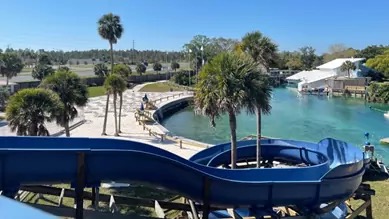
Buccaneer Bay opened, adding water slides, swimming areas, and sandy beach amenities to the Weeki Wachee experience. Image is from the Florida Division of Tourism circa 1982. This is Florida’s only spring-fed water park that remains at 72° year-round. The Lifeguards now hold a Jr. Lifeguard Camp annually which is greatly anticipated by the public and sponsored by the Friends of Weeki Wachee.

Mermaids of Yesteryear
In 1997 the Park celebrated its 50th anniversary by hosting a historic mermaid reunion. This milestone sparked the beloved “Mermaids of Yesteryear” (or Legendary Sirens) shows, bringing 200 retired mermaids from across the country to return and perform their original shows. This is a photo of the Sirens from 2016. Over the years, the Sirens have been the instructors for the annual Sirens of the Deep Camp, sponsored by the Friends of Weeki Wachee. “Once a mermaid, always a mermaid!”

Weeki Wachee Becomes a State Park
Weeki Wachee Springs was acquired by the State of Florida and became a State Park, preserving this unique piece of Florida history. Before 2008, it was still the privately run “City of Live Mermaids”. The community “Save Our Tails” campaign played an important role in saving the attraction and protecting its future.

Friends of Weeki Wachee is Formed
The Friends of Weeki Wachee Citizens Support Organization is recognized as the leading advocate for Weeki Wachee Springs State Park. It was established in 2009 as a 501(c)(3) by passionate volunteers to support the park and preserve its history through fundraising with its annual events, Mermaid Cove store, memberships, camps, grants and donations. As a nonprofit organization, Friends provides additional resources for equipment, emergency repairs, landscaping, educational outreach, community recreation, and preservation efforts.

Historic Theatre Renovation
The historic 400-seat underwater theatre was renovated and reopened, continuing to welcome visitors to experience the world-famous mermaid shows. Renovated with new floors, fresh paint, upgraded electrical systems and improved lighting, and the roof restored to its vintage clamshell roof.

The Mermaid Tail Trail Begins
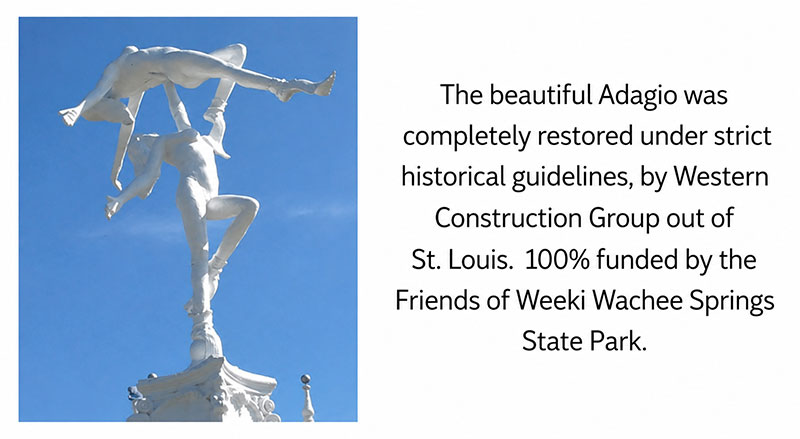
As part of Weeki Wachee’s 75th anniversary celebration, the Mermaid Tail Trail was launched by the Florida Adventure Coast and displayed for a time at the park. Life-sized mermaid statues, painted by local artists, were placed throughout Hernando County to celebrate the park’s history and encourage tourism. 2022 is also the year the famous Adagio statue was restored with funding from the Friends of Weeki Wachee.

Friends of Weeki Wachee Expands
In January 2023, the Friends of Weeki Wachee launched a new website and mobile app to better connect with visitors, members, and supporters. The app has been instrumental to the park because it has real-time updates for the public relative to show time changes, events, weather issues, and park closures due to reaching capacity attendance.
A Living Florida Treasure
Weeki Wachee Springs State Park remains one of Florida’s last classic nostalgic roadside attractions. Since 1947, visitors have continued to enjoy live mermaid performances in the historic underwater theatre, river cruises, kayaking, wildlife shows, and special community and state events, as well as the Friends annual Beach Bash, Christmas and Halloween events. Weeki Wachee’s magic continues - where history, nature, and imagination meet.